I see it again and again, just how tightly marketing and technology are now bound together.
You have marketers with a genuinely great eye, strong on design, strong on the creative side but who are just missing the technical skills to land it – and it shows. You can see there was a vision there, but the final result has flaws, because they couldn’t quite use the technology to implement what they’d pictured.
So I felt a quiet nod of recognition reading Business Insider’s list of the most innovative marketing leaders of 2026. The piece argues that traditional marketing is now only a sliver of the job and that today’s best marketers are “part brand-builder, part data scientist… part AI wrangler.” One of them, Comcast’s marketing chief, put it plainly: marketing used to be one or two dimensional, and now you “increasingly have to become more of a technologist… to really drive the business.”
I completely agree. The marketers who understand the link between marketing and technology can reach more people, to present a better image when they do reach them, and to make the whole customer experience more seamless. They can also turn it on themselves: working more efficiently, producing more, at higher quality.
Which is all true at the top end of the market. But here’s the thing nobody in that article is talking about: what any of this means if you’re not a multinational organisation. If you’re a local trades company, an accountant, a two-person business doing good work that nobody can see.
You don’t need to be seen seven times. You need to be seen once, and not blow it.
Marketing people love to talk about touchpoints. The “rule of seven” is the idea that someone needs to come across you about seven times, across different platforms, before they’ll buy. It’s not wrong exactly, but it assumes something most businesses don’t have: enough reach for those seven encounters to even happen.
For most businesses, the problem isn’t being seen seven times. It’s being seen at all, and then what happens in the few seconds after.
Picture a local trades company or accountant. You search, you find them, you click the website and you’re taken back to the beginning of the internet. You’re not sure what they actually do for their customers, or how the process works, or whether you’d get a rough price before committing to anything. If you’re honest, you’re not even sure they’re still trading. And the site is harsh enough that you don’t feel comfortable making contact. It reminds you of someone sitting behind it who doesn’t really care about you.
So you click away and go and find someone else.
You end up contacting the company that gave you the most information upfront. The one that answered your questions and your worries before you’d even made contact. They felt modern, professional and inviting. They felt like they wanted your custom and would do whatever they could to help. The whole thing already felt simple, because you understood how it would work.
The first business owner has no idea any of this happened. They don’t know they lost your attention, and your sale, because they never spent the time to stay current or think about their customer.
And here’s the part that should sting a little: this should be an obvious, ongoing focus. The website and the customer experience should be constant considerations. But most haven’t touched anything in ten years. They don’t even need to commit to some relentless effort – even an occasional spruce-up and modernisation would transform how their customers feel about them.
The fix is smaller than they fear and bigger than they think
So what would I actually have them do?
The bare minimum is to look at the website they already have and ask one honest question: how does this come across to a complete stranger? Then fix what’s broken and change whatever’s giving the wrong impression.
In truth, most of these businesses do need a new site. But that doesn’t have to be expensive, especially set against how much they’re losing by leaving it as it is. A basic starter site is £550 and in the grand scheme of things, that’s an immediate leg up, not a luxury.
That’s the visible half, but what actually happens when someone fills in your contact form? Do they get anything back? A bare email dropping into an inbox somewhere or a proper thank-you, maybe with a useful piece of content that starts answering their questions while they wait?
What happens when someone messages you on Instagram or Facebook? Do they sit there for days, the message left unread, wondering if anyone’s home? Or does something reply within five minutes, letting them know they’ve been heard and pointing them to what they need?
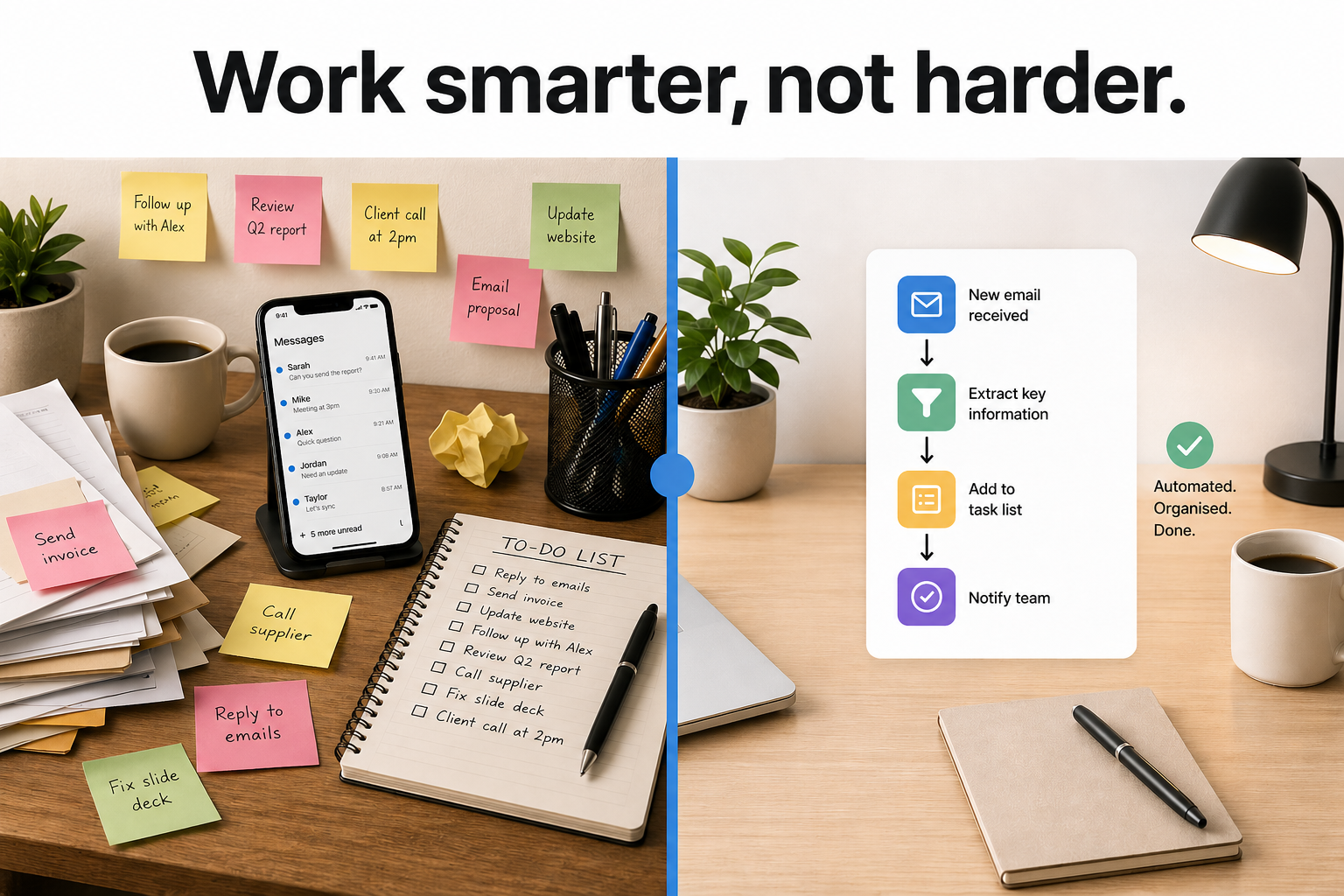
That gap matters more than it looks. Replying to an enquiry within five minutes instead of thirty makes you roughly a hundred times more likely to actually reach that person (MIT/InsideSales, 2007). When you’re busy doing the actual work, you can’t be that fast by hand. But technology can in the background, while you get on with the job. Setting that up is exactly the kind of automation we help businesses put in place.
Not sure if this is you?
If you’ve read this far and you’re wondering whether any of this applies to you, there’s a good chance that, deep down, you already know it does. The honest blockers are usually one of three: you’re not sure where to start, you’re worried about the cost, or you’ve never really believed this stuff was a priority.
If that’s you, that’s exactly what a Digital Presence Assessment is for. It’s free. We look at where you stand and tell you where to focus. Where your time and effort will actually move the needle on being found online and turning that into enquiries. No big rebuild to begin with. Just an honest picture of where you’re losing people, and what to fix first.