Everyone’s talking about AI. And if you’re a small business owner, you’ve probably nodded along in conversations about it while quietly thinking: that’s all well and good, but what does it actually mean for me?
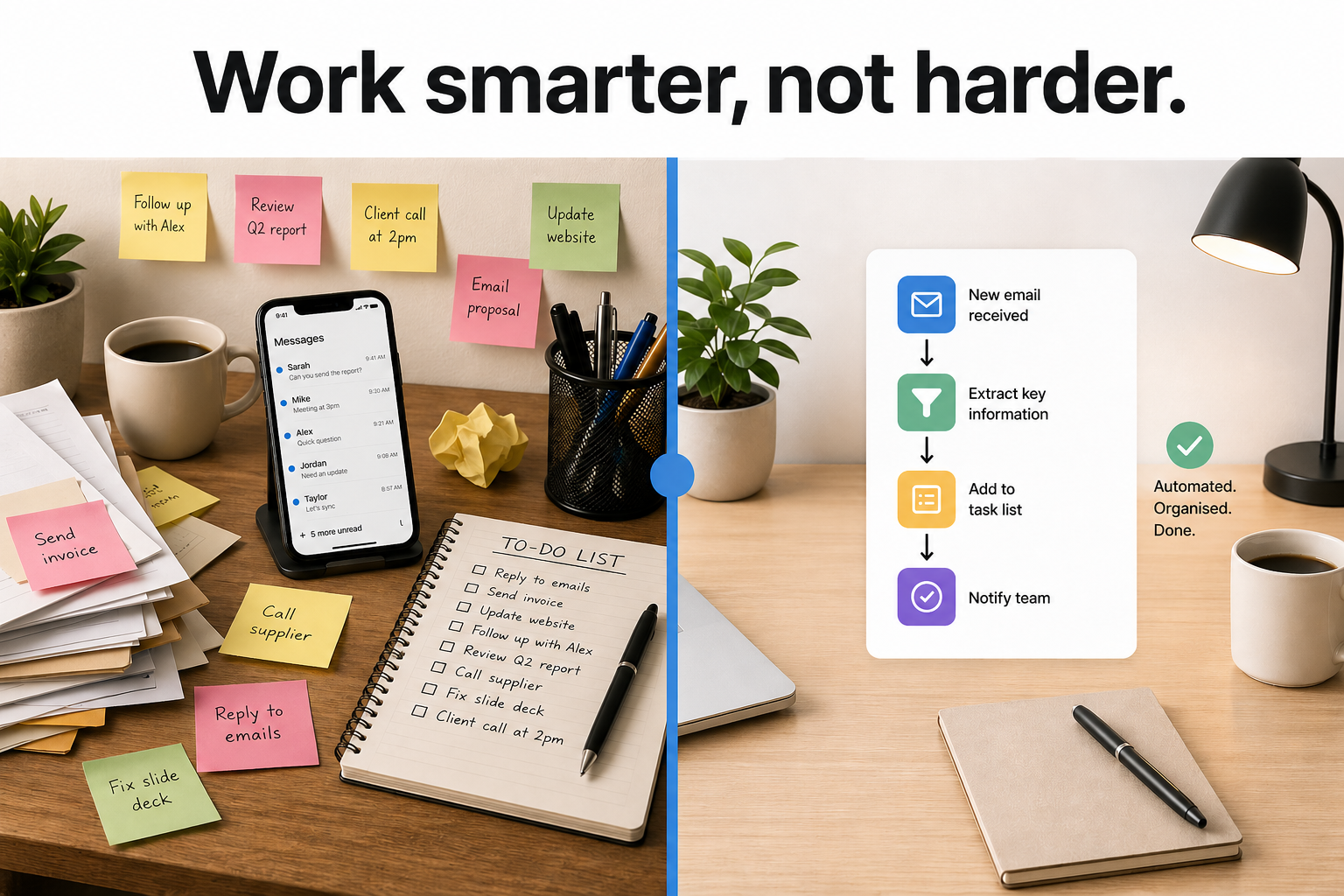
The honest answer is that for most small businesses, AI automation isn’t about revolutionary transformation. It’s about quietly removing the small, repetitive tasks that eat your time so you can spend that time on things that actually move the needle.
The admin problem nobody talks about
UK small businesses spend an average of 120 working hours a year on administrative tasks. That’s three full working weeks, lost to back-office jobs that keep the lights on but don’t grow the business.
The tasks vary – invoicing, chasing leads, answering the same customer questions, booking appointments, data entry – but the feeling is universal. You’re busy, but you’re not making progress.
This is exactly the kind of problem automation was built for.
What AI automation actually looks like in practice
For a small business, automation usually falls into two categories: the stuff customers see, and the stuff that happens behind the scenes.
On the customer-facing side, a chatbot on your website or social media can answer common questions immediately – your prices, your opening hours, how your service works – without you having to respond to every message individually.
For a beauty salon, that might mean a client getting answers about a treatment before deciding to book. For a care provider, it might mean a family getting clear information about funding options at the exact moment they need it. The enquiry gets handled. The customer gets a faster, better experience. And you didn’t have to stop what you were doing.
Behind the scenes, automation can handle the things that quietly drain your week – logging enquiries into your CRM, sending invoice reminders, following up with leads who went quiet, routing incoming messages to the right place. Small things, done consistently, without anyone having to remember to do them.
Here’s the part most people don’t expect
A good automation doesn’t just help the people who are ready to buy. It also filters out the people who aren’t – and that’s just as valuable.
Imagine you get ten messages a day through social media. Half of them are people getting a feel for pricing, or who wouldn’t go ahead once they knew a specific detail about how you work. You might spend real time and energy responding to every one – and that’s not necessarily wasted, because some might come back later. But ultimately, they were never going to be customers right now. That time could have gone somewhere that made a bigger impact.
An automation handles those conversations at scale, at any hour, without draining your energy. The people who are genuinely ready get faster, better service. The people who aren’t get a polite, helpful answer and you never had to stop what you were doing.
The misconception that puts most people off
When I mention automation to small business owners, the reaction is often the same: “That sounds complicated. That sounds expensive. That’s for bigger companies than mine.”
It isn’t.
The biggest mistake is thinking automation has to be a big, complex system that transforms the way the entire business works overnight. In reality, the best place to start is with one small workflow. One repetitive task. One thing that happens the same way every time and doesn’t need a human to do it.
That’s the part that gets missed: small automations compound over time.
It’s the same principle as compound interest. A consistent one percent improvement, repeated over a long enough period, produces results that feel disproportionate to the effort involved. The businesses that pull ahead aren’t always the ones that made the biggest changes – they’re the ones that made small, consistent improvements and kept going when others stopped.
The Power of Compounding: 1% Better Every Week
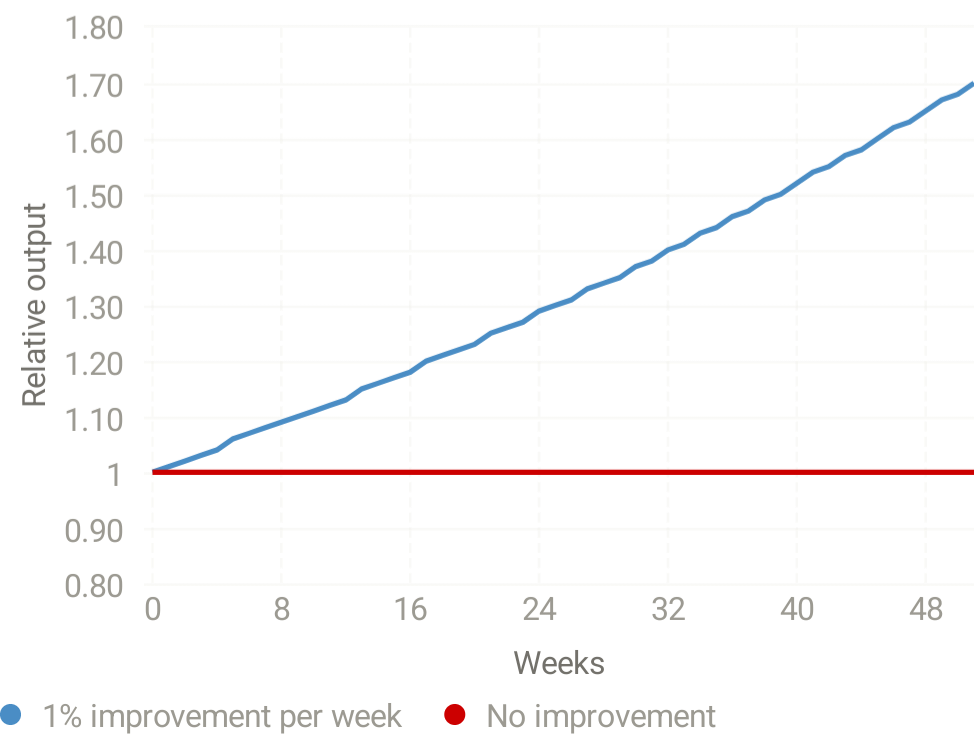
One chatbot. One automated follow-up. One enquiry that logs itself without you touching it. None of these feel dramatic on their own. But together, over time, they quietly give you back hours every week – and those hours compound too.
Is there something you’d like to stop doing manually?
Most businesses have at least one repetitive task that automation could handle quietly in the background. You probably already know what yours is.
If you’re curious what that might look like in practice, we’re happy to have that conversation – no jargon, no obligation, just a practical discussion about what’s possible.